|
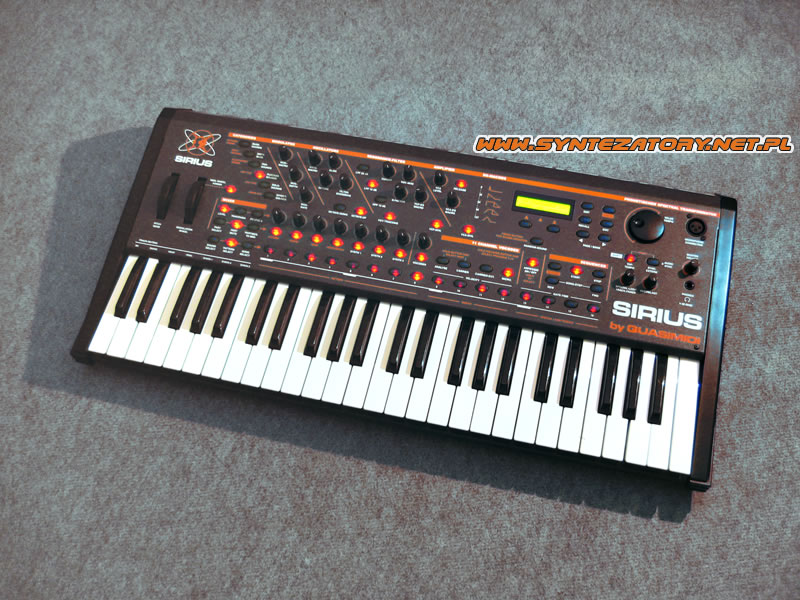
Some synths are weirdos.
Why are they weirdos? For example, they have a DTE synthesis at their core and nobody quite knows what
this DTE means (one thing is certain - it uses
spectral waveforms
and analog overdriven filters, so sometimes it's like a DX7 on steroids. You
also get samples, e.g. of String Melody or The Mellotron, so Sirius is
basically a rompler synth).
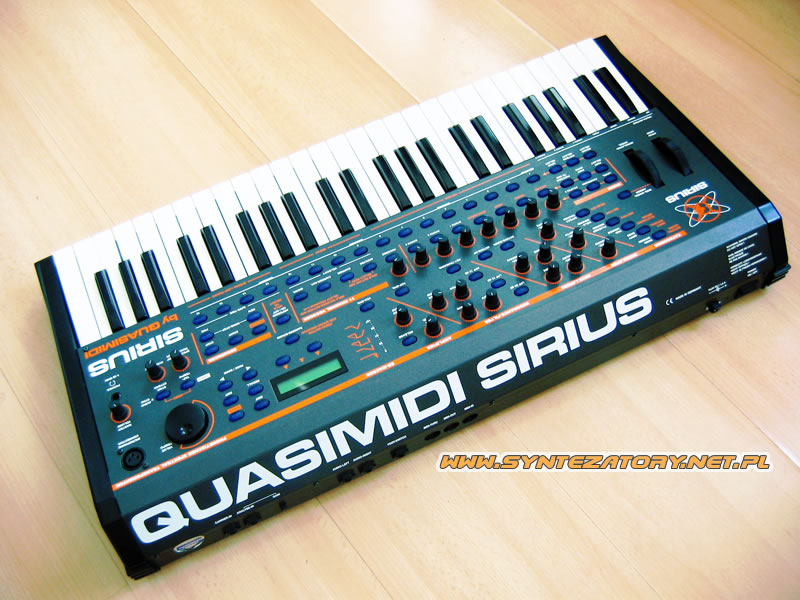
Next: instead of four knobs
dedicated to control the four points of the envelope, synth weirdos have one knob
that does it all (precise editing of the ADSR points is hidden in the
menu). Or they have some uncommon features like "Overblast"
and external audio tempo
analyzer.
The Sirius has it all, and that makes it a weirdo for me. But it's an
acceptable weirdo, with a broad and deep palette of sounds. Thumbs up for the samples -
they sound A LOT better
than the ones of Blofeld and Radias.
I don't think The
Sirius will become anybody's favorite synth, but it's a nice addition
to the studio, and it gives you so many Virus-esque sounds that you
begin to wonder whether QUASIMIDI labs was the place where the ACCESS
techs developed their careers ;P
Niektore modele to
prawdziwe dziwadla. To tutaj oparte jest na syntezie DTE i nikt za
bardzo nie wie czym to DTE jest (jedno jest pewne: Sirius generuje
spectral waveforms i posiada analogowy przesterowywalny filtr wiec
czesto brzmi jak DX7 na sterydach, ma tez na pokladzie przerozne
sample, np. ze String Melody i Mellotrona, wiec jest tak naprawde
romplero-syntezatorem).
Zamiast czterech potencjometrow do kontroli podstawowych punktow
obwiedni, zostal obdarzony jedna galka ktora robi za wszystkie
wspomniane (dokladna edycja obwiedni zanurzona w menu). Dziwadla moga
jeszcze miec niecodzienne funkcje jak "Overblast" lub analizator tempa
zewnetrznego sygnalu. Sirius wszystko to ma i dlatego jest dla mnie
dziwadlem. Ale bardzo dobrze brzmiacym dziwadlem z bardzo szeroka i
gleboka paleta brzmien. Punkty za sample - brzmia one lepiej niz
Blofeldowe i Radiasowe.
|